
PV Environmental Monitoring System for Efficient Solar Power Operation
As a green and sustainable industry, photovoltaic (PV) power generation has seen rapid growth in recent years. Today, environmental monitoring systems are increasingly being deployed in commercial and industrial PV power plants, as accurate meteorological and solar radiation data are essential for evaluating plant performance and optimizing energy output.
Recently, Jinzhou Sunshine Meteorological Technology Co., Ltd. (Sun Weather) successfully completed the installation and acceptance of a PV power plant environmental monitoring system for the Henan No.2 Construction PV project in Lingwu City, Yinchuan, Ningxia. By providing precise and reliable meteorological data, the system enables the PV plant to adjust operational strategies based on real-time weather conditions, thereby improving power generation efficiency.
At the same time, the monitoring system offers valuable data support for grid dispatching, helping the power grid better respond to weather-related challenges and ensuring stable and reliable grid operation.
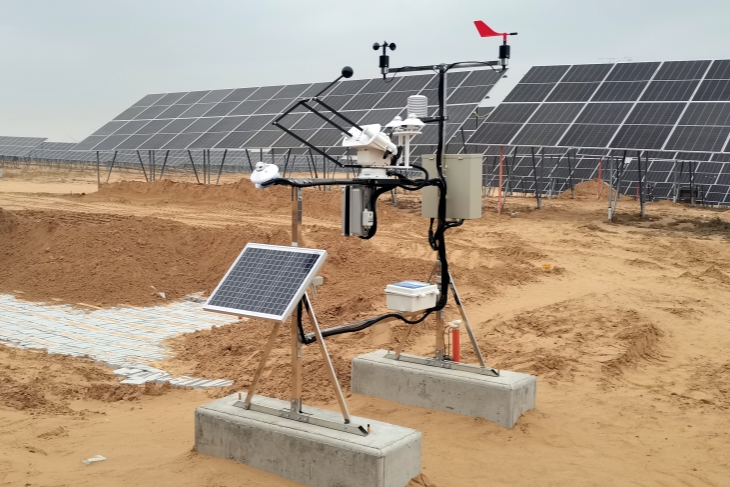
This project is part of the National Energy Group’s Lingwu 2 GW Hybrid Photovoltaic Base, which supports the Lingwu–Lingshao UHV DC transmission project. The project has a total installed capacity of 2,000 MW on the DC side and 2,400 MW on the AC side. Once fully commissioned, it is expected to generate up to 3.4 billion kWh of clean electricity annually, promoting the development of West-to-East Power Transmission toward a greener and more intelligent energy system.
At the same time, the growth of the photovoltaic industry has driven the extension of related industrial chains. Innovative agro-photovoltaic integration models, such as the “Goji Berry + PV” system, not only improve the local ecological environment but also enhance agricultural efficiency and increase farmers’ income.
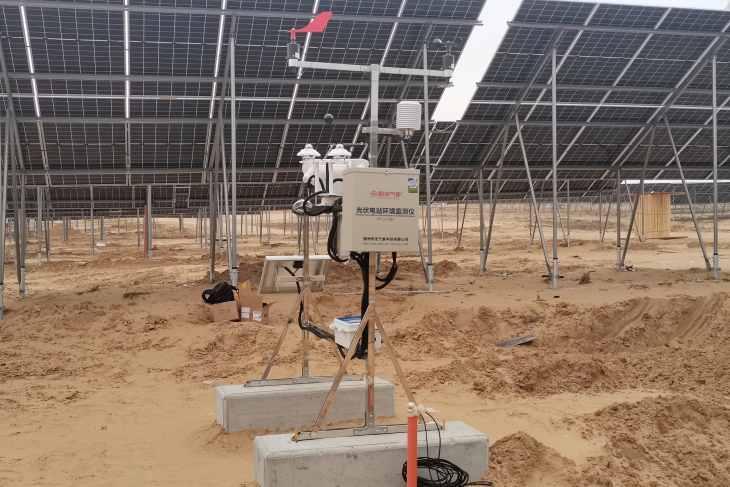
The Sun Weather PC-2-T2 Photovoltaic Power Plant Environmental Monitoring System complies with the World Meteorological Organization (WMO) meteorological observation standards and relevant IEC (International Electrotechnical Commission) specifications. Designed to address the significant impact of weather conditions on renewable energy output, the system enables high-precision monitoring of multiple key environmental parameters. The monitoring scope includes ambient temperature, ambient humidity, module temperature, wind speed, wind direction, atmospheric pressure, as well as a wide range of solar radiation parameters, such as global tilted irradiance, global horizontal irradiance, direct normal irradiance, and diffuse solar radiation. This solution not only enhances the operational efficiency and performance assessment of local renewable energy facilities, but also contributes to the development of a more sustainable, reliable, and resilient energy network, enabling the full potential of clean energy resources to be realized.
