
“PV + Education” — Sun Weather’s PV Environmental Monitoring Systems Help Create a New Platform for Green Education.
Amid the deepening implementation of China’s “Dual Carbon” goals and the growing momentum toward green, low-carbon campus development, distributed photovoltaic (PV) systems have emerged as a key solution for optimizing campus energy structures.
By making efficient use of idle rooftop spaces and generating clean electricity on-site, distributed PV systems offer a practical and sustainable approach. Through the implementation of “PV + Campus” initiatives, schools can install PV facilities on the rooftops of administrative buildings, laboratories, and student dormitories.
This not only helps build environmentally friendly and energy-efficient campuses, but also enhances students’ awareness of ecological sustainability, stimulates interest in renewable energy research, and fosters energy-saving and environmental responsibility among faculty and students—injecting strong green momentum into the high-quality development of educational institutions.
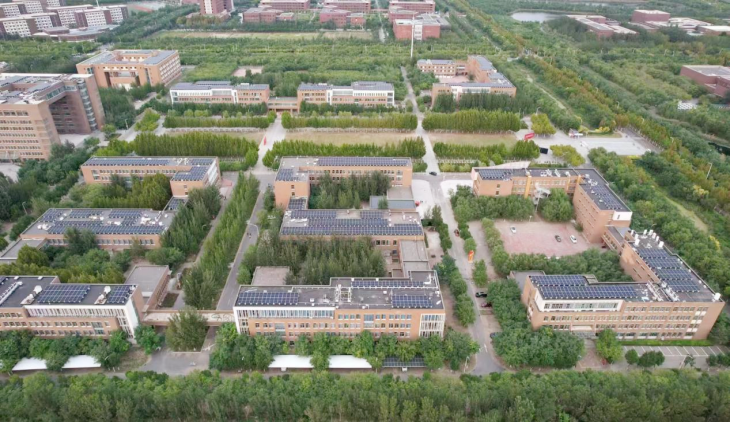
Recently, the PV power station environmental monitoring system provided by Sun Weather for Taiyuan University of Technology has been officially put into operation. The system accurately monitors real-time meteorological conditions to optimize power generation strategies. Equipped with functions such as remote monitoring and control, remote diagnostics, and big data analysis, it enables digitalized, refined, and efficient energy management. This solution significantly enhances campus energy efficiency and strengthens energy management capabilities, supporting the development of smarter and more sustainable university campuses.
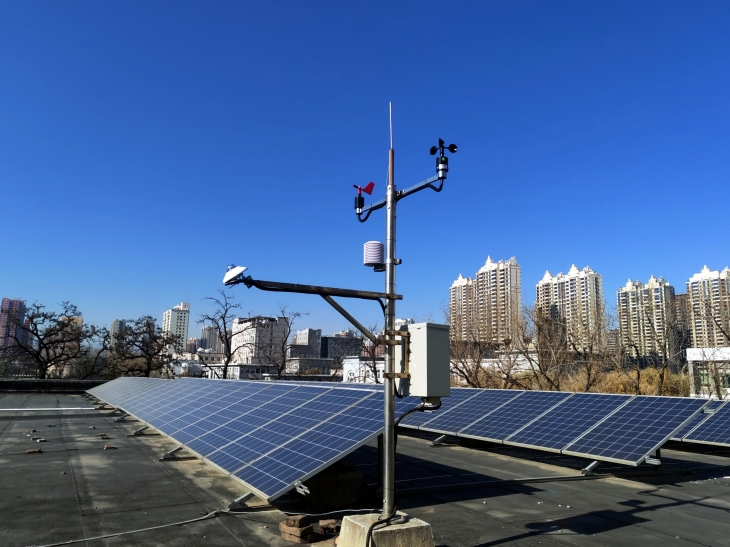
The PV environmental monitoring system deployed in this project is specifically designed to address the environmental characteristics of the power station’s core generation areas. It adopts a distributed architecture combining a central data logger with a matrix of sensors, overcoming the limitations of traditional centralized monitoring systems. This approach enables the construction of an all-weather, multi-dimensional, and comprehensive environmental monitoring network with no blind spots.
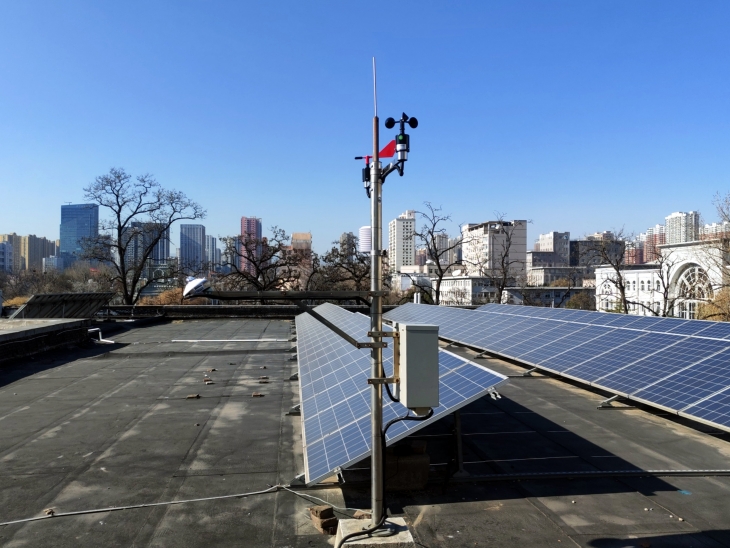
In addition to accurately capturing fundamental meteorological parameters such as ambient temperature, humidity, wind speed, wind direction, and atmospheric pressure, the system is specifically designed to address the core requirements of the photovoltaic industry. With minute-level data sampling and all indicators meeting research-grade standards, the system performs real-time analysis of variations in global solar radiation at different times of the day and evaluates their impact on PV power output. Based on this analysis, optimal maximum-radiation strategies are applied to improve the amount of solar irradiance received on the inclined plane of PV modules, thereby increasing overall power generation efficiency. This provides a scientific and data-driven basis for the effective development and utilization of solar energy resources on university campuses.
